




Best-CBSE-School-In-Nashik

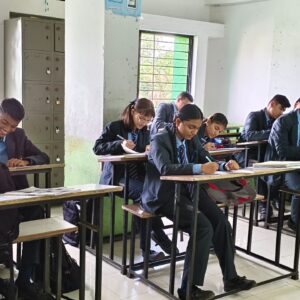
Top Study Tips for CBSE Board Exams

Best-CBSE-School-In-Nashik

Create a Study Plan: Create a well-structured study schedule that allots time to each subject depending on its weightage as well as your unique skills and shortcomings.

Set specific objectives: Divide your study objectives into smaller, more manageable aims. This keeps you motivated and focused as you monitor your progress.

Arrange Study Materials: Collect all of your textbooks, notes, and references. To save time searching for resources, keep them organised and easily accessible.

Examine Previous Year’s Papers: Solve previous years’ question papers and sample papers to become acquainted with the exam format and question patterns.

Recognise the Syllabus: Understand the CBSE syllabus for each subject thoroughly. Concentrate on the topics that will carry the most weight in the tests.

Use Mind Maps and Diagrams: Visual tools such as mind maps and diagrams can help you understand and remember difficult concepts more readily. 

Take frequent breaks: To avoid fatigue and keep attention, divide your study sessions into pieces and take brief breaks in between. Maintain a balanced diet, get enough sleep, and engage in regular physical activity to stay healthy. A healthy body helps to support a healthy mind.

Practise Time Management: Set a time restriction for each segment during practise examinations to imitate exam conditions and develop your time management skills.

Maintain Current Affairs: For disciplines such as Social Science, maintain current affairs and recent developments that may be important to the exam.

Regular revision helps to reinforce what you’ve learned. Make concise revision notes and return to them frequently.

Seek Clarification: If you’re having trouble understanding a subject, don’t be afraid to approach your teachers or peers for assistance. Clarify any doubts as soon as possible.

Maintain a good attitude and handle exam-related stress through meditation, deep breathing, or any relaxation technique that works for you.

Mock Tests: Take full-length mock tests to mirror the actual exam atmosphere. Analyse your performance to uncover areas for improvement.

Avoid Procrastination: Procrastination might lead to last-minute cramming. Maintain a study timetable and avoid leaving things to the last minute. 

Avoid Distractions: Find a quiet and dedicated study environment free of distractions such as social media, TV, or loud noises.

The Difference Between Primary Education and Secondary Education

best-school-in-nashik

A student’s academic path includes two separate phases: primary education and secondary education. They have special qualities and diverse functions. The following are some important distinctions between primary and secondary education:
Grade Levels and Age Groups:
Basic Education: Children in this period often range in age from 6 to 11 or 12 years. From kindergarten (or pre-primary) to elementary or primary school grades (often up to grade 5 or grade 6), it covers classes.

Secondary school: Starting after basic school, secondary education is for students between the ages of 12 and 18. Grades six through twelve, or middle school and high school, are included.

Subjects and Curriculum:

Primary Education: The primary curriculum introduces pupils to a variety of disciplines like science, social studies, and art while laying the groundwork for fundamental abilities like reading, writing, and maths. The goal is to provide a solid foundation for future learning.
Secondary education: A more specialised and sophisticated curriculum is introduced. A larger range of subjects are studied by students, including sciences, the humanities, foreign languages, and electives. The curriculum gets kids ready for college and their future careers.

Methods of instruction and pedagogy

Primary Education: Play-based learning and experiential learning are common themes in primary education. To engage young students, teachers frequently emphasise interactive and hands-on learning techniques.
Secondary education: Teaching strategies become more formal and structured, focusing on developing students’ analytical, critical-thinking, and deeper comprehension abilities. More accountability is required from students when it comes to their education.

Function of Teachers:

Primary Education: Teachers in primary schools foster pupils’ basic reading and numeracy skills by acting as mentors. They foster an environment that supports inquiry and exploration.
Secondary Education: Teachers in secondary schools frequently focus on particular topic areas and assist pupils in in-depth learning. They offer career counselling, assist with course selection, and aid in exam preparation for students.

evaluating and assessing:

elementary Education: Assessment in elementary schools is frequently less formal and may include ongoing review, teacher feedback, and observation. Holistic growth is the main focus.
Secondary Education: Assessment is more regimented and involves recurring exams, tasks, projects, and assignments. As students move towards higher education, grades and marks become increasingly crucial.

Getting Ready for Higher Education:

Primary Education: The foundation for both social and academic growth is laid in primary education. It gets students ready for the change to secondary education’s more structured and focused learning environment.
Secondary Education: Secondary education prepares pupils for either postsecondary employment or further study (college or university). The curriculum narrows its attention to topics that complement students’ career goals.
A student’s educational path must include both basic and secondary school, each with distinct objectives and importance in becoming a well-rounded person.

Best-CBSE-SCHOOL-IN-NASHIK

How many CBSE schools are there in India?

Best-CBSE-SCHOOL-IN-NASHIK

The Central Board of Secondary Education is known as CBSE. The Government of India oversees this national board, which oversees secondary education in both public and private schools in India. According to reports, there were 28,486 CBSE schools in India as of March 2023. There are a rising number of CBSE schools in India overall. There are more than 240 CBSE schools outside of India spread across 28 nations. Because the CBSE curriculum gives them a competitive advantage, the CBSE schools are well-liked by JEE and NEET hopefuls.

In a similar vein, compared to boards like the ICSE and IB, the CBSE school curriculum is thought to be more condensed, smaller, and lighter. Let’s look at the reasons for and methods for increasing the number of CBSE schools in India.

Indian CBSE schools in total

In India, there are more than 28,486 CBSE schools. The number of schools connected to the CBSE board is growing, nevertheless. The approximate number of CBSE schools in each of the Indian states and union territories is given below. Each number is followed by a “+” sign to indicate an increasing number.

CBSE Schools in Assam
CBSE Schools in Andaman and Nicobar
CBSE Schools in Sikkim
CBSE Schools in Arunachal Pradesh
CBSE Schools in Bihar
CBSE Schools in Punjab
CBSE Schools in Andhra Pradesh
CBSE Schools in West Bengal
CBSE Schools in Uttarakhand
CBSE Schools in Uttar Pradesh
CBSE Schools in Tripura
CBSE Schools in Telangana
CBSE Schools in TamilNadu
CBSE Schools in Rajasthan
CBSE Schools in Lakshadweep
CBSE Schools in Chhattisgarh
CBSE Schools in Puducherry
CBSE Schools in Odisha
CBSE Schools in Nagaland
CBSE Schools in Mizoram
CBSE Schools in Meghalaya
CBSE Schools in Manipur
CBSE Schools in Maharashtra
CBSE Schools in Madhya Pradesh
CBSE Schools in Delhi
CBSE Schools in Daman and Diu
CBSE Schools in Dadra and Nagar Haveli
CBSE Schools in Goa
CBSE Schools in Haryana
CBSE Schools in Gujarat
CBSE Schools in Himachal Pradesh
CBSE Schools in Jammu and Kashmir
CBSE Schools in Jharkhand
CBSE Schools in Karnataka
CBSE Schools in Chandigarh
CBSE Schools in Kerala

232+
115+
212+
290+
692+
1086+
197+
260+
499+
2303+
46+
258+
649+
890+
12+
521+
20+
309+
34+
13+
23+
65+
650+
984+
2023+
5+
8+
15+
1300+
337+
238+
127+
388+
704+
162+
1286+

Freedom Fighters of India and Their Contributions

school-near-me

Numerous freedom fighters who were instrumental in determining the course of the country played a significant part in India’s war for independence from British colonial control by exerting great sacrifice and effort. Here are some well-known independence fighters and their noteworthy accomplishments:

Indian National Congress leader Mahatma Gandhi (1869–1948) used nonviolent civil disobedience to spearhead several large-scale actions against British rule, such as the Salt March and Quit India Movement. Millions were motivated by his Satyagraha (truth force) concept, which ultimately contributed significantly to India’s independence.

Nehru, Jawaharlal (1889–1964): Nehru, the first Prime Minister of an independent India and a personal friend of Gandhi, was essential to the process of constructing the country. His leadership influenced India’s foreign policy as he promoted socialism, secularism, and modernization.

Bose, a dynamic leader who sought armed revolt against British authority, lived from 1897 until 1945. In order to fight for India’s independence during World War II, he established the Indian National Army (INA) and allied with the Axis countries. His “Jai Hind” campaign and initiatives to build an army to liberate India attracted the public’s attention.

Singh, Bhagat (1907–1931): Bhagat Singh was a revolutionary who sought to overturn British rule via armed conflict and became a symbol of youth resistance. His bravery and selflessness inspired countless generations. He participated in numerous protests and assassinations of British officials.

The “Iron Man of India,” Sardar Vallabhbhai Patel (1875–1950), was a key player in bringing together the princely states of India after independence. He was known as the “Iron Man of India.” He had a significant role in discussions with the British during the change of power as well.

The First War of Indian Independence, commonly known as the 1857 revolt, was led by Rani Lakshmibai (1828–1858), the Queen of Jhansi, against the British. She became a stand-in for tenacity and bravery.

From 1888 till 1958, Maulana Abul Kalam Azad Azad, a well-known Muslim leader and scholar, made substantial contributions to the Quit India Movement and relentlessly fought for Hindu-Muslim harmony. Later on, he was appointed India’s first minister of education after independence.

1856–1920 Bal Gangadhar Tilak Tilak, a well-known nationalist leader, promoted the use of regional languages and cultures to bring Indians together in opposition to British authority. He made the idea of “Swaraj” (self-rule) widely accepted.

The 1865–1928 Lala Lajpat Rai: Rai, a vociferous opponent of British policies, took part in a number of anti-colonialist movements. He was an integral component of the Simon Commission demonstrations as well as the Non-Cooperation Movement.

(1906–1931) Chandrashekhar Azad A daring revolutionary noted for his participation in numerous acts of resistance against the British, Azad was a close friend of Bhagat Singh. Instead of being apprehended by the authorities, he chose to fight to death.

These are only a few instances; there were a great number of other freedom fighters that significantly aided India’s war for independence. Their commitment, selflessness, and fortitude continue to serve as an example for people everywhere.

Importance of Punctuality

school-near-me

The practise of being on time and keeping appointments and commitments is known as punctuality. It is a significant principle and way of life that applies to both personal and professional contexts. Here are some justifications on why being on time is crucial:

Respect for Others’ Time: Being on time shows that you value other people’s time. Being punctual demonstrates to others how much you respect and cherish their time. This encourages a sense of dependability and trust while fostering healthy relationships.

Efficient and Organised: Being on time helps you be efficient with your time and organised. Being on time increases your likelihood of creating a systematic strategy for your duties and activities, which boosts productivity and efficiency.

Punctuality is a sign of professionalism when used in a professional setting. It demonstrates your dedication to your work, obligations, and coworkers. Punctual people are seen as reliable team members by coworkers and employers.

Meeting Deadlines: Being on time and meeting deadlines go hand in hand. For projects to be completed, tasks to be completed, and overall success in various endeavours, deadlines must be met. Being on time enables you to successfully manage your time and produce outcomes.

Reduced Stress: Being on time helps you stay in control of your schedule and reduces your tendency to rush. As a result, you experience less stress and approach your work with greater calm and concentration.

Better Reputation: Being on time helps to build a good reputation. Those who are constantly on time and trustworthy are more likely to be remembered. Being on time is a reputation that can lead to new experiences and opportunities.

Self-Control: Being on time demands self-control and the capacity to restrain your urges and avoid distractions. The habit of being on time can spread to other aspects of your life, encouraging general self-discipline and personal development.

Effective Communication: Your devotion and professionalism are communicated by your punctuality, which is a nonverbal form of communication. It promotes open communication in a variety of settings and aids in creating clear expectations.

Education & Learning: Being on time is crucial in a learning environment. You can maximise your learning opportunities and ensure that you get the most out of them by arriving on time for courses and assignments.

Personal Development: Being reliable might help you advance personally. It motivates you to set priorities for your duties, manage your time more efficiently, and choose your activities carefully.

In conclusion, being on time is an important quality that can have a good effect on many aspects of your life. It exhibits respect, accountability, and dependability and supports achievement, efficient time management, and wholesome interpersonal interactions.

What is ICSE Board?

school-near-me

A well-known and generally respected educational board in India is the ICSE (Indian Certificate of Secondary Education) board. The Central Board of Secondary Education (CBSE) is one of the two main national-level boards for school education in the Philippines. The ICSE board is renowned for its thorough and well-balanced curriculum, which seeks to give students a solid foundation in a variety of topics.
The ICSE board’s key attributes are as follows:
Curriculum: Academics and extracurricular activities are both emphasized in the ICSE curriculum, which emphasizes a whole-person approach to education. It includes a broad range of topics, such as languages, sciences, math, social studies, and the arts.

Exams: The board gives class 10 pupils the ICSE test, which is regarded as being equal to the class 10 board exams given by other educational boards in India. Students’ knowledge, comprehension, and application of the topics they have learned are evaluated during the exam.

In comparison to other educational boards, the ICSE syllabus is intended to be thorough and rigorous, frequently addressing topics in greater depth. Students may gain a deeper comprehension of the subjects as a result.

English-medium instruction: The majority of subjects are taught in English at ICSE schools, which benefits pupils’ linguistic proficiency.

Internal Assessment: Projects, practical work, and internal assessments are frequently incorporated into the evaluation process by the ICSE board. Students are encouraged to actively participate in their studies and put their knowledge to use.

Flexibility: The ICSE board permits schools to select textbooks and pedagogical approaches in accordance with their choices, which can result in a more varied and dynamic learning environment.

Although the ICSE board is well-known in India, each state also has its own state-level educational boards that hold exams for students in classes 10 and 12. When deciding between several educational boards, students and parents frequently take into account elements including the curriculum, the teaching style, and the student’s professional goals.

Rudra-the-Best-Cbse-School-In-Nashik robotics

What is Experimental Learning & Its Importance?

Rudra-the-Best-Cbse-School-In-Nashik robotics

Experimental learning, sometimes referred to as experiential learning, is a teaching strategy that prioritizes real-world experiences as the main way to learn. It is predicated on the notion that people learn best when they actively engage with the material and reflect on their experiences.

In contrast to being merely passive information consumers, learners are encouraged to actively engage in activities and explore, experiment, and learn new things. This method enables students to strengthen their critical thinking abilities, connect theory to practice, and gain a greater comprehension of the subject.

Experiential learning is significant for a number of reasons:

Engagement: Experiential learning encourages active participation in the educational process. Engaging in activities increases learners’ motivation and investment, which improves their entire learning experience.

Application of knowledge: Students have the chance to put their academic knowledge to use in practical settings by engaging in hands-on activities. They gain a greater understanding of the subject matter as well as an understanding of how knowledge can be used practically.

Critical thinking abilities: Experimental learning promotes critical thinking, problem-solving, and decision-making based on observations and experiences. This encourages the growth of analytical and problem-solving abilities, which are beneficial in many facets of life.

Knowledge retention: According to studies, students who actively engage in the learning process are more likely to recall and retain the material. Learning becomes more memorable and significant when students use their numerous senses and have first-hand experience with subjects.

Personal growth and development: Experiential learning frequently entails difficulties and dangers, which present chances for personal development. It can increase self-assurance, foster resilience, and foster the growth of crucial abilities like teamwork, communication, and flexibility.

Transferability of knowledge and skills: Since experimental learning focuses on real-world applications, the knowledge and abilities picked up in one environment are frequently transferable to other contexts. The experiences and methods of problem-solving that learners bring to the classroom can be used in various contexts, enhancing the flexibility and relevance of their learning.

Overall, experimental learning delivers a dynamic and engaging educational experience that improves learning outcomes, fosters personal development, and equips people with the skills they need to face difficulties in the real world. Learners can gain useful skills that go beyond rote memory by actively participating in the subject matter and critically thinking about their experiences.

[automatic_youtube_gallery type="channel" playlist="https://www.youtube.com/playlists" channel="UCxSj3TQbt662q0VVVgU1hhw"]
Best-CBSE-SCHOOL-IN-NASHIK-craft

5 Concentration Activities To Improve Your Kid’s Focus Level

Best-CBSE-SCHOOL-IN-NASHIK-craft

Children’s academic achievement and general growth depend on their ability to concentrate and focus. The following five concentration exercises will help your child’s level of focus:

Exercises in mindfulness: Children’s attention and focus skills can be improved through mindfulness techniques. Teach them basic mindfulness techniques like guided imagery, body scans, and deep breathing. Children can stay present and focused by participating in these activities, which teach them to become conscious of their thoughts, feelings, and environment.

Memory games: Memory games are great for sharpening focus and brain function. Play interactive games such as “Simon Says,” “Memory Match,” or “I Spy.” Children who play these games must pay attention, retain information, and maintain attention to the activity at hand.

Jigsaw puzzles and Sudoku are two kinds of puzzles that might help you focus and improve your problem-solving abilities. As your child develops, start with puzzles that are appropriate for their age and gradually increase the complexity. Puzzles test one’s ability to pay continuous attention and encourage persistence.

Active listening exercises: Practise active listening exercises with your kids to improve their listening abilities. Ask your child to recall specific information or steps after you tell them a brief story or give them a set of instructions, for instance. Children learn to focus on spoken information and improve their ability to follow instructions through this practice.

Exercises to improve focus: Involve your child in activities that are designed to improve focus and attention.Ask them to sketch a picture while paying close attention to every detail, for example, or put a time limit on how long they have to finish a task. These activities aid kids in learning how to tune out distractions and focus on the subject at hand.

Always make sure that these activities are entertaining and age-appropriate. To keep your youngster engaged, adapt them to his or her interests and learning preferences. As kids improve their ability to concentrate, be patient, encouraging, and provide positive reinforcement.

Best-CBSE-School-In-Nashik

Best way to celebrate world environment day in school

Best-CBSE-School-In-Nashik

The celebration of World Environment Day in the classroom is a great opportunity to educate children about environmental challenges and motivate them to take on civic responsibilities on a global scale. The finest ways to observe World Environment Day in schools are suggested by the following:

Organize a meeting or other event: Create a unique assembly to honor World Environment Day. Include speeches, concerts, and presentations that emphasize the value of environmental preservation. To motivate and educate pupils, invite guest lecturers, environmental specialists, or neighborhood campaigners.

Conduct eco-friendly workshops: Arrange seminars on sustainable living and eco-friendly practices. Provide interactive activities such as recycling crafts, upcycling initiatives, composting demonstrations, or homemade eco-friendly cleaning solutions. Encourage pupils to take an active role and discover useful strategies to lessen their impact on the environment.

Create a school garden or plant trees: Work with local environmental groups or governmental organisations to schedule a tree-planting ceremony on the grounds of your school. Start a school garden instead, if there is room, so that children may learn about growing their own food, composting, and plant care. It encourages stewardship of the environment and gives kids a chance to engage with the natural world.

Cleanup effort: Arrange a cleanup effort inside and outside the school. Encourage employees, teachers, and students to pick up trash, sort recyclables, and clean up public areas like adjacent parks. Students learn the value of keeping a clean environment through this exercise, which also promotes a sense of community involvement.

Competitions with an environmental subject: Hold competitions with an environmental topic, such as poster-making, essay writing, or photography contests. Encourage kids to share their own ideas and opinions on issues like biodiversity, climate change, and sustainable development. In addition to keeping pupils interested, this will encourage research and critical thinking abilities.

Show thought-provoking documentaries or short films about environmental challenges. Organise screenings of educative documentaries. After that, lead dialogues to enable students to share their opinions and give them a chance to consider how human activity affects the environment.

Challenge the school community to go without paper for the entire day. Discourage the use of single-use paper items at all times in the school and encourage teachers to perform digital courses and tasks.This activity emphasizes sustainable practices and emphasizes the value of cutting back on paper use.

Organise activities or workshops that will involve parents and the neighbourhood in commemorating World Environment Day to involve parents and the neighbourhood. Encourage children to take part in tree-planting events, environmental education classes, or neighbourhood cleanup campaigns. As a result, the relationship between the school and the neighbourhood community is strengthened and a sense of shared responsibility is encouraged.

Always keep in mind that the key to a successful World Environment Day celebration is to make it interesting, instructive, and enjoyable. You may encourage pupils to become steadfast supporters of a sustainable future by encouraging a sense of environmental responsibility in them.

Best-CBSE-School-In-Nashik

Things Not To Do While Making Career Decisions

Best-CBSE-School-In-Nashik

There are several things you should steer clear of while choosing a career in order to make wise and advantageous judgments. Here are some actions to avoid:

Making hasty decisions: Refrain from choosing a vocation before giving it significant thought. Before choosing a course of action, give yourself plenty of time to think, reflect, and analyze your options.

Letting others make decisions for you: It’s vital to get opinions and advice from others, but in the end, the choice should be yours. Do not let outside factors, such as expectations from family or society, determine your career. Pay attention to your own interests, ambitions, and passions.

Choosing a career that is not in line with your natural talents and passions might result from failing to evaluate your own skills, strengths, shortcomings, and interests. Spend some time getting to know yourself and finding out what professions best showcase your individual skills.

Making professional decisions without performing adequate research is a mistake. Investigate various professions, job titles, and career routes. Find out the school requirements, employment chances, earning potential, and workplace environment related to the jobs you are interested in.

Limiting your alternatives to only those you are familiar with: Don’t limit yourself to just those professions. Investigate various industries and use unorthodox routes. You can come upon untapped chances that exactly suit your interests and abilities.

Neglecting work-life balance: When choosing a career, it’s important to take your ideal work-life balance into account. Avoid putting your personal well-being, relationships, and quality of life on the back burner in favor of societal status, financial gain, or both.

Neglecting the value of passion: In a perfect world, your profession would be a reflection of your interests and passions. If picking a career doesn’t excite you, don’t pursue it purely on the basis of money or what others will think of you. Success and long-term happiness can result from passion and intrinsic motivation.

Neglecting the future job market: When choosing a career, take into account the demands and tendencies of the labour market in the future. Avoid choosing a vocation that could one day become outdated or extremely competitive. Look for professions that have room for advancement and are predicted to be in demand.

Fear of failure: This emotion can keep you from taking chances and achieving your real work goals. Don’t allow fear to stop you. Accept challenges, and see setbacks as lessons to be learned along the way to success.

being rigid: Career paths are rarely straightforward, and new chances could present themselves along the road. Don’t be too set in your ways or averse to change. Keep an open mind and be flexible to new opportunities that could benefit your professional development.

You can make job selections that are more in line with your beliefs, ambitions, and aspirations by avoiding these typical mistakes. Never forget to put yourself first, ask for help when you need it, and give yourself plenty of room to grow.